
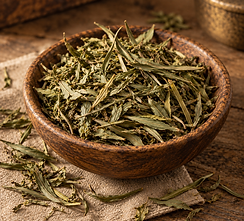
Tarragon
Leaf
Tarragon (Artemisia dracunculus) is offered as dried aromatic herb for culinary use, tea, infusion, and traditional herbal preparations. Commonly incorporated into digestive and warming blends, Tarragon is valued for its aromatic, stimulating, and gently warming qualities.
Medicinal Profile
Tarragon has traditionally been used as an aromatic digestive herb. It is associated with supporting appetite and digestion and has historically been incorporated into preparations intended to ease digestive stagnation. Its action is aromatic and gently stimulating rather than strongly medicinal.
Traditional & Historical Context
Tarragon has been used across European, Mediterranean, Central Asian, and Middle Eastern traditions as both food and medicine. Its culinary role is particularly important, and dried leaves have long been incorporated into teas, vinegars, sauces, and digestive preparations.
Ritual & Folk Applications
Tarragon may be associated symbolically with courage, protection, vitality, and movement. Its aromatic character lends itself to ritual blends intended to strengthen resolve or move stagnant energy.
Preparation Notes
Best prepared as a light infusion or used in culinary preparations. It may be combined with other aromatic digestive herbs.
Safety Considerations
Tarragon contains estragole and related aromatic constituents. Concentrated extracts and essential oil should not be treated like ordinary culinary quantities. Medicinal use should be conservative, particularly during pregnancy. Evidence regarding concentrated exposure warrants caution.
Featured In
Dragon — for ancient power, ember and earth, and dark wonder.